If you’ve ever wandered down a drugstore or beauty aisle and found yourself lingering longer at a display that makes a lipstick tube, a serum bottle, or a eyeshadow palette pop, you’ve felt the quiet power of a well-designed cosmetics display stand. As a supplier who’s spent over a decade building these stands, I’ve seen first-hand how a good display doesn’t just hold products—it turns browsers into buyers, reinforces a brand’s identity, and even cuts down on retail staff time spent restocking. But here’s the thing: not all display stands are created equal. What works for a luxury serum line tucked in a high-end department store won’t work for a mass-market lip gloss line in a convenience store, and what works on a countertop won’t work for a pop-up shop’s floor space. Today, I’m breaking down the main types of cosmetics display stands, what makes each unique, and how we design them to fit every brand’s specific needs. Let’s dive in. Cosmetics Display Stand
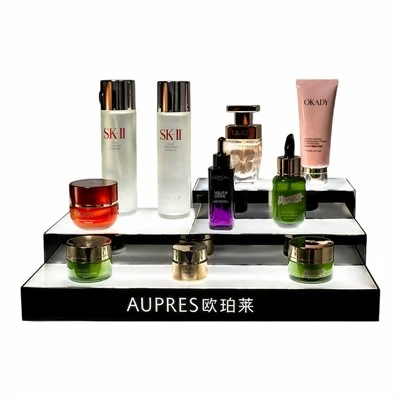
First up, countertop display stands. These are the workhorses of almost every beauty retail space—small, portable, and designed to sit right on the checkout counter, a mid-level store shelf, or a makeup counter station. When I started in this business, countertop stands were mostly just flimsy plastic racks that bent under the weight of a few lipsticks. But today, they’re customizable enough to fit everything from a single line of matte lipsticks to a full skincare mini-collection. What makes countertop stands different is their size and purpose: they’re meant for high-traffic, high-intent impulse buys—think a line of hydrating lip balms, travel-sized facial mists, or eyeshadow palettes priced under $20 that shoppers can grab while waiting to pay. Because they’re on a counter, they need to be stable, not take up too much space, and showcase products at eye level for someone standing in line. For example, a small 2-tier acrylic countertop stand can hold 8 lipsticks on the top tier and 6 mini face masks on the bottom, with a small brand logo etched right into the acrylic so it’s visible without cluttering the display. We also make countertop stands with tiered shelves that angle slightly backward—this isn’t just a design choice; it’s so every product is visible, no one’s hidden behind another. A common mistake brands make is overcrowding these stands, but our team always reminds clients that less is more for countertop displays: if a shopper can’t see every product at a glance, they’ll move on.
Next, floor-standing display stands. These are the big, bold ones that draw attention from across a store or even a mall corridor. Unlike countertop stands, floor-standing units are designed to make a statement—they’re usually 4 to 6 feet tall, which is just tall enough to catch someone’s eye as they walk past, without being so tall they block other displays or feel intrusive. Floor stands work best for full product lines, new launches, or limited-edition collections that a brand wants to highlight. Last year, we worked with a clean beauty brand that was launching a line of plant-based serums; their floor stand was a sleek, matte black metal frame with open shelves that showed off the frosted glass serum bottles, and even had a small LED light strip along the bottom to make the glass glow under store lighting. One thing to consider with floor stands is weight distribution—since they’re tall, they need a wide, sturdy base to prevent tipping, especially if they’re holding multiple heavy bottles or large palettes. We also add small wheels to most floor stands that don’t stay in fixed locations; this is perfect for stores that rearrange their displays for seasonal sales or holiday promotions. Another type of floor stand is the endcap display, which fits at the end of a store aisle. Endcaps are usually designed to hold bulk products, travel-sized sets, or sale items, and they often have price tags attached directly to the frame so shoppers don’t have to hunt for pricing information. I’ve seen endcap displays that hold 200 lip balms, stacked neatly in a grid, or endcaps for skincare sets that have a small basket at the bottom for free samples—these little touches are what make a floor stand work for both the brand and the store.
Then there are wall-mounted display stands. These are the ones that save floor or counter space, ideal for small boutique stores, salon stations, or even pop-up shops with limited square footage. Wall stands are installed directly onto a wall, so they come in all sorts of shapes and sizes: some are horizontal, perfect for a row of makeup brushes or a set of nail polishes, while others are vertical, with narrow slots that hold individual foundation bottles or skincare vials. What’s great about wall stands is that they can be customized to fit any wall—we’ve made curved wall stands for small boutique nooks, and modular wall stands that can be expanded as a brand grows. One of my favorite projects was a small independent makeup artist who wanted a wall stand for her salon station; it was made of light, durable aluminum with small hooks for makeup brushes and slots for foundation bottles, and it even had a magnetic strip at the top for her tweezers and eyelash curlers. Wall stands also work well for brands that want a minimalist look—since they’re mounted flush to the wall, they don’t have bulky bases that take up space. A lot of natural and clean beauty brands love wall stands because the slim, simple design matches their eco-friendly, uncluttered brand identity. One thing to keep in mind with wall stands is weight capacity: they need to be installed correctly into wall studs to support heavy products like glass skincare bottles or heavy eyeshadow palettes, which is why we always provide installation instructions for every wall stand we make.
Podium display stands are another category, though they’re a bit more specialized. Podiums are usually freestanding, slightly shorter than floor stands (around 3 to 4 feet tall), and designed to be interactive—think of a podium at a makeup counter where a brand rep does product demos, or a pop-up shop’s demonstration station. These stands often have a flat top surface for a demo tray, open shelves below for product samples, and sometimes a small sign holder for promotional materials. What sets podium stands apart is their functionality: they’re built for engagement, not just display. For example, when a brand launches a new line of lipstick, their podium stand might have a sample lipstick on the flat top, shelves below for full-size products and sample packets, and a sign that says “Test the new rose matte shade” to encourage shoppers to touch and try the product. We’ve also made podium stands with built-in USB ports for small product demonstration screens, or with a small waste bin hidden below the demo surface for used sample wipes—little details that make a big difference for both the brand rep and the shoppers. Podium stands are most common in high-end department stores, beauty conventions, and pop-up events, where in-person engagement is a key part of the sales strategy.
Let’s not forget about modular display stands, which are becoming increasingly popular for brands that need flexibility. Modular stands are made of separate, interchangeable parts—shelves, hooks, sign holders, bases—that can be rearranged, added to, or taken apart depending on the brand’s needs. For example, a brand might use a modular stand for a holiday season as a 3-tier floor stand holding gift sets, then take it apart and rearrange it into a wall-mounted stand for regular skincare products after the holidays, or turn it into a countertop stand for a new launch. Modular stands are especially useful for small to mid-sized brands that don’t have a huge retail budget, because they don’t have to buy a new display every time their product line changes. We use durable, lightweight materials like acrylic and aluminum for most of our modular stands, so they’re easy to transport and assemble—something I know is important for brands that do pop-up shops or travel to beauty trade shows. One of our clients is a small indie skincare brand that uses the same modular stand for 3 different store locations, rearranging it each time to fit the different sizes of the store’s retail space. It’s saved them thousands of dollars over the years, and that’s the kind of practical design I love to see.
Beyond these main categories, there are specialty display stands for specific product types—lip gloss racks, perfume stands, skincare display cases for high-end products, and even stands for makeup brushes or hair care products. For example, perfume stands are often designed with angled slots that let shoppers see the bottle’s label and the liquid color, which is a big part of perfume’s appeal. Skincare display stands for luxury products, on the other hand, are often enclosed or semi-enclosed cases to protect high-end serums or creams from dust, and they sometimes have locking mechanisms to prevent theft. Lip gloss racks are usually small, rotating stands with individual slots for each lip gloss tube, perfect for countertop or wall mounting— I remember when I first started, most lip gloss racks were cheap plastic, but now we make them with brushed metal and soft velvet inserts that keep the gloss tubes from scratching and look high-end enough for even luxury beauty lines.
Now, I want to talk about what goes into making a good cosmetics display stand, because it’s not just about picking a shape or size. Every stand we build starts with understanding the brand’s needs: who is their target customer? Where will the stand be used? What products will it hold? For example, a teen-focused brand selling affordable lip gloss will have different needs than a luxury anti-aging serum brand. The teen brand’s stand might be bright, colorful, rotating, and hold 50+ lip gloss tubes, while the luxury serum stand will be sleek, understated, made of high-quality glass or metal, and hold only 10-12 premium bottles. We also consider store lighting: a stand that works in a brightly lit drugstore might get lost in a dim boutique, so we might add LED light strips or reflective materials to make products stand out in low light. Durability is another key factor—retail stands get bumped, moved, and restocked every day, so we use materials that don’t scratch easily, and we test every stand to make sure it can hold the weight it’s designed for. And of course, brand alignment: a sustainable, clean beauty brand won’t want a stand made of cheap plastic, so we use recycled acrylic or FSC-certified wood for those clients.
If you’re a brand owner who’s looking for the right display stand for your products, my advice is to think beyond just “what looks good.” Ask yourself: where will this stand live? Will it be in a busy drugstore, a quiet boutique, or a pop-up event? What products are you showcasing, and how many do you need to display? Do you need it to be portable, or will it stay in one place? These questions will help you narrow down the type of stand you need, and if you’re not sure, we’re here to help. Whether you need a small countertop stand for a new launch, a bold floor stand for a seasonal sale, or a modular stand that can grow with your brand, we can design and build a custom stand that fits your needs, your brand, and your budget. We work with brands of all sizes, from small indie lines to national beauty companies, and we take pride in making stands that don’t just hold products—they help brands connect with their customers and drive sales.
If you’re ready to talk about display stands for your cosmetics line, or you have questions about any of the stand types I mentioned, feel free to reach out for a procurement consultation. I’m always happy to walk through different options, share examples of past projects, and help you find the right fit for your brand.
Vape Display References
- American Marketing Association. (2022). In-Store Visual Merchandising: The Impact of Display Design on Consumer Purchasing Decisions. Journal of Retail and Consumer Behavior, 45, 112-127.
- Beauty Inc. (2023). 2023 Trends in Cosmetics Retail Displays: Flexibility, Brand Alignment, and Space Optimization. Industry Report for Beauty Retailers.
- National Retail Federation. (2021). Store Fixture Safety Guidelines: Weight Distribution and Stability Requirements for Retail Display Stands. Retail Operations Best Practices.
- Cosmetics and Toiletries Magazine. (2022). Custom Display Design: Matching Stand Function to Product Category and Retail Environment. Industry Feature for Beauty Brand Owners.
- Sustainable Packaging Coalition. (2023). Eco-Friendly Retail Display Materials: A Guide for Beauty Brands Focused on Sustainability. Sustainability in Beauty Supply Report.
Shenzhen Xingzhong Display Products Co., Ltd.
As one of the most professional cosmetics display stand suppliers in China, we’re featured by quality products and good service. We warmly welcome you to buy customized cosmetics display stand made in China here from our factory. If you have any enquiry about quotation and free sample, please feel free to email us.
Address: 80 Tangkeng Road, Biling Street, Pingshan District, Shenzhen, Guangdong Province
E-mail: leo@xzdisplay.com
WebSite: https://www.xzdisplay.com/
