Hey everyone, and welcome to another quick deep dive into the stuff we deal with every single day here at [your company name] (we’re a multi-function meter supplier, so trust me, I hear this question ALL the time). If you’ve ever stood in front of an energy panel, scratching your head at all those dials and numbers, you’ve probably wondered at least once: can a multi function meter measure power factor? Multi Function Meter
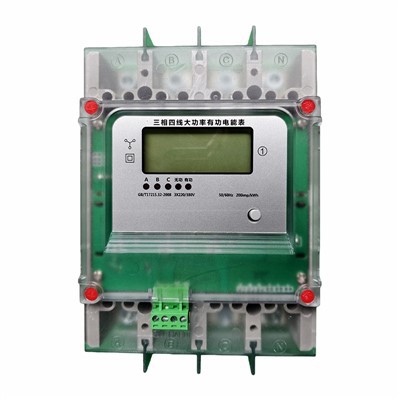
I get it—power factor sounds like one of those super jargon-heavy electrical terms that’s only for guys in hard hats and lab coats. But here’s the thing: it’s way more important than you think, especially if you’re trying to keep your energy bills low, avoid penalties from your utility, or just make sure your equipment isn’t wasting power left and right. So let’s break this down like we’re chatting over coffee, no boring textbook jargon, I promise.
First, let’s do a quick refresh on what power factor actually is, because you can’t answer the meter question without knowing that. When you plug a toaster, a fridge, or a whole factory’s assembly line into the grid, you don’t just get plain old “power”—that’s real power, the stuff that actually does work (like heating toast, cooling milk, running motors). But there’s also reactive power, the energy that doesn’t do work but’s still needed to keep magnetic fields going in motors, transformers, all that stuff that makes your gear run.
Power factor is just the ratio of real power (the good stuff, measured in kilowatts, or kW) to apparent power (the total power coming from the grid, measured in kilovolt-amperes, or kVA). So if your power factor is 1, that’s perfect—all the power you’re getting is real, no waste. Most of us are somewhere between 0.8 and 0.95, which is normal, but if it drops below like 0.7 or 0.8, that’s when utilities start slapping you with power factor penalties. Because they have to send more current to make up for that wasted reactive power, which means they need bigger lines, more equipment—so they pass that cost on.
Okay, now back to the main question: can a multi function meter measure this? Short answer? Hell yes. But wait, not all multi function meters are created equal, and there’s a reason I can say that with confidence—we’ve spent years testing these things, troubleshooting customers’ setups, and making sure our products actually deliver on every promise.
Let’s start with how regular old single-function meters work, to put this in perspective. A basic kWh meter (the one that just counts how much electricity you use for your bill) only measures real power, right? It tracks the current going through your lines, multiplies it by the voltage, and that’s your real power. But that doesn’t account for reactive power at all. So if you’ve got a bunch of old motors or HVAC units pulling reactive power, that basic meter will miss that—you might get a bill that’s higher than it should be, and you won’t even know why.
Multi function meters? They’re like the Swiss Army knives of energy meters. They don’t just count kWh. They measure voltage, current, frequency, real power, reactive power, apparent power, even harmonics (those weird, distorted signals that come from LED lights, inverters, old electronics that mess with your power). And power factor? That’s just a calculated value from two of the things they measure directly: real power and apparent power. Wait, but hold on—some people might say “wait, can’t you just calculate it with a calculator?” Yeah, but here’s the catch: to get an accurate power factor, you need real-time, high-precision measurements of both voltage and current at the exact same time. That’s called phase angle, right? Because reactive power is shifted either ahead or behind real power, so the angle between voltage and current tells you how much reactive power you’re dealing with.
Basic multi function meters use something called a phase-locked loop (PLL) to sync their voltage and current measurements, so they can get that phase angle right. Then they plug that into a formula: power factor = cos(theta), where theta is the phase angle between voltage and current. Some even measure it directly with a current transformer (CT) and voltage transformer (VT) that feed into a microprocessor that crunches those numbers in real time. No more guessing, no more manual calculations that are off if your readings aren’t synced.
But wait, let’s get real—this isn’t magic, and there are limits. Like, if a multi function meter is super cheap, skips on the precision of its CTs and VTs, or only updates its measurements every few seconds, it might give you a power factor that’s close but not accurate enough to catch those tiny (or not so tiny) dips that lead to penalties. That’s where our meters come in—we test every unit to make sure the phase measurement is within 0.1% error, so you can trust that power factor number enough to make decisions, like adding power factor correction capacitors to bring it back up if it’s too low.
Let’s throw in a real example, because that’s the stuff that sticks. Last year, we had a small manufacturing customer—they made custom wooden furniture, had a 10,000 sq ft shop with a bunch of old 3-phase motors, dust collection systems, and LED lights that were cheap and wonky. Their utility had just hit them with a $1,200 power factor penalty on their last bill, and they were confused because they thought their power factor was fine. They were using a basic kWh meter, so they had no idea what their actual power factor was.
We sent over a few of our entry-level multi function meters to test for a month. Once we installed them, we were seeing their power factor was consistently at 0.72—way too low. Turns out, their old motors were pulling a ton of reactive power when they ran the dust collectors on high, and the cheap LEDs were adding harmonic distortion that messed with the power factor reading (wait, another thing! Harmonics can lower power factor too, not just phase shift—good multi function meters track that too). We helped them add a set of power factor correction capacitors, which took their power factor up to 0.94, and their next bill had zero penalty. They saved over $1,500 in that first month alone, plus they now have ongoing real-time data from our meters to keep an eye on it moving forward.
That’s the thing about multi function meters and power factor—this isn’t a “nice to have” feature, it’s a money-saving feature. For residential users, it might not be as big a deal unless you’ve got a ton of big appliances, but for commercial and industrial customers? It’s non-negotiable. And guess what? Our meters don’t just give you power factor—they log it over time, so you can see when your power factor dips (like if a machine is acting up, or a motor is failing), you can set alerts if it drops below a certain threshold, and you can export all that data to your computer or building management system. No more waiting for your utility’s once-a-year power factor check—you have real-time info in your pocket.
Wait, but let’s address a common myth I hear all the time: “Power factor is only for big factories.” No way. A small office with 20 desktop computers, a couple of HVAC units, and a server room? They might not get penalties, but they’re wasting hundreds of dollars a year on extra energy because of a low power factor. Even residential users with whole-home solar setups? Power factor matters there too—if your inverter has a low power factor, you might not be exporting as much energy back to the grid as you could, or you could run into issues with net metering. Our meters work for single-phase residential and 3-phase commercial/industrial, so we’ve got you covered no matter the size.
Another question I get: “Do I need a special multi function meter, or is the basic one enough?” For most commercial users, the basic multi function meter (the one that measures voltage, current, real/reactive/apparent power, and power factor) is perfect. But if you’ve got harmonic-heavy equipment (like variable frequency drives, welding machines, solar inverters), you’ll want a meter that also measures total harmonic distortion (THD), because that affects power factor too. Our mid-range and premium models have that built in, so you’re not buying a separate harmonic meter on top of your power factor meter. That’s the whole point of multi function, right? One device that does all the things, no extra gear.
Let’s talk about how the tech works under the hood, just to make sure I’m not just blowing smoke (I’m an engineer by trade, so I like the details, but I’ll keep it simple). Every multi function meter has sampling circuits that grab voltage and current readings thousands of times per second. Those readings go through a analog-to-digital converter (ADC) that turns them into digital data, and then a microprocessor does the math. To calculate power factor, it takes the real power (sum of voltage times current over all samples) and divides it by the apparent power (the square root of the sum of (voltage times current squared)), or it uses the phase angle between voltage and current from the synchronized samples, either way. The key here is synchronization—if the voltage and current samples are off by even a tiny bit, the power factor number will be wrong, which is why cheap meters cut corners here and give inaccurate readings.
We’ve designed our meters to handle that synchronization perfectly, even in noisy industrial environments where other meters might glitch. We’ve got over 10 years of experience building these, and we test every single unit in our lab before it leaves the warehouse, so you can trust that power factor number. We also offer different mounting options—panel mount, DIN rail mount, even portable ones for field testing—so whether you’re retrofitting an old panel or testing a new construction site, we’ve got a meter that fits your needs.
Let’s circle back to that initial question again, just to make sure we’re all on the same page. Can a multi function meter measure power factor? 100% yes. It’s not a “bonus feature” added on at the end—it’s one of the core functions that makes a meter multi function. The only caveat is that not all multi function meters are created equal. A $20 no-name meter from a big box store might give you a rough estimate, but if you need accurate, reliable data to save money, avoid penalties, or maintain your equipment, you’re going to want a quality meter from a supplier that knows what they’re doing.
That’s where we come in. We’ve worked with small cafes, 100-person manufacturing shops, big distribution centers—all kinds of customers who needed to measure power factor accurately, and our multi function meters deliver. We don’t just sell meters; we work with you to figure out what features you need, whether that’s real-time monitoring, data logging, integration with your building management system, or just a simple display that shows power factor right there on the panel.
If you’re tired of getting hit with unexpected power factor penalties, if you’re not sure why your energy bills are higher than they should be, or if you just want more visibility into your energy use to cut waste, we’re here to help. Shoot us a message to connect with our product experts, who can walk you through our different models, answer any other questions you have about multi function meters or power factor, and help you pick the right one for your needs.
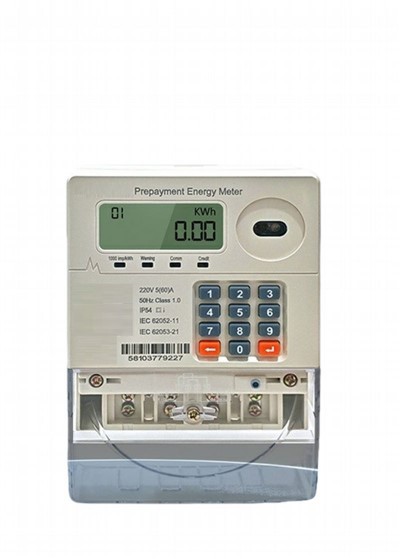
Don’t let jargon or confusing tech hold you back—power factor doesn’t have to be scary, and a good multi function meter takes all the guesswork out of it. We’ve got your back.
DIN Rail Energy Meter References:
- International Electrotechnical Commission (IEC) 62053-22, Electricity metering equipment (a.c.) – Particular requirements – Static meters for active energy (classes 0.2 S and 0.5 S)
- Electrical Construction Maintenance, “Understanding Power Factor and How It Affects Your Energy Bills,” 2022
- U.S. Department of Energy, “Power Factor Correction: Benefits and Applications for Commercial and Industrial Facilities,” 2021
- Schneider Electric, “Multi-Function Meters: Key Features for Energy Monitoring and Management,” 2020
Zhejiang Qunte New Energy Technology Co., Ltd.
As one of the most professional multi function meter manufacturers in China, we’re featured by quality products and good price. Please rest assured to buy discount multi function meter made in China here from our factory. We also accept customized orders.
Address: No. 56, Fengxi Road, Tang’ao Yu Village, Liushi Town, Yueqing City, Wenzhou City, Zhejiang Province
E-mail: 251951196@qq.com
WebSite: https://www.zjqtmeter.com/
