Hey there! As an abrasive polishing wheel supplier, I often get asked a bunch of questions about what our products can and can’t do. One question that pops up quite a bit is, "Can an abrasive polishing wheel be used for ceramic polishing?" Well, let’s dive right into it and find out. Abrasive Polishing Wheel

First off, let’s talk a bit about what ceramic is. Ceramics are super cool materials. They’re made from inorganic, non-metallic substances, usually clay and other minerals. They’re fired at high temperatures, which gives them some pretty amazing properties. They’re hard, they’re wear – resistant, and they can withstand high temperatures. Think about your kitchen tiles, your bathroom fixtures, or even some high – tech electronic components. All of these are made of ceramics.
Now, when it comes to polishing ceramics, the goal is to make the surface smooth, shiny, and free of any scratches or rough spots. This not only makes the ceramic look better but can also improve its performance in some cases. For example, a polished ceramic surface in a medical device might be less likely to harbor bacteria.
So, can our abrasive polishing wheels do the job? The answer is a big yes! But there are a few things you need to keep in mind.
The Right Abrasive Material
The first thing is the type of abrasive material on the wheel. Different abrasives work better for different types of ceramics. For softer ceramics, like some types of porcelain, a less aggressive abrasive like aluminum oxide might be a good choice. Aluminum oxide is relatively inexpensive, and it can provide a smooth finish without causing too much damage to the ceramic surface.
On the other hand, for harder ceramics, like silicon carbide ceramics, you’ll need a more aggressive abrasive. Silicon carbide itself is a great option here. It’s harder than aluminum oxide, so it can effectively remove material from the hard ceramic surface. But be careful, because if you use it on a softer ceramic, it might scratch the surface too much.
The Grit Size
Another important factor is the grit size of the abrasive. Grit size refers to how coarse or fine the abrasive particles are. A lower grit number means a coarser abrasive, which is better for removing a lot of material quickly. If you’re starting with a rough ceramic surface that has a lot of unevenness, a low – grit wheel, say 60 or 80 grit, can be used to level the surface.
Once you’ve got the surface more or less even, you can switch to a higher – grit wheel. Wheels with grit sizes of 220, 400, or even higher are used for finer polishing. They’ll remove the scratches left by the lower – grit wheel and give the ceramic a nice, smooth, and shiny finish.
The Bonding Material
The bonding material that holds the abrasive particles together on the wheel also matters. There are different types of bonding materials, like resin, vitrified, and metal. Resin – bonded wheels are flexible and can conform to the shape of the ceramic surface. They’re great for polishing curved or irregularly shaped ceramics.
Vitrified – bonded wheels are more rigid. They can withstand high temperatures and are good for high – speed polishing. Metal – bonded wheels are the most durable, but they’re also the most aggressive. They’re usually used for very hard ceramics and for rough grinding before the final polishing.
Safety First
When using an abrasive polishing wheel for ceramic polishing, safety is super important. You need to wear the right protective gear, like safety glasses to protect your eyes from flying debris, and gloves to protect your hands. Also, make sure the polishing machine is set up correctly and is in good working condition.
Some Real – World Examples
I’ve seen our abrasive polishing wheels in action on all sorts of ceramic products. For instance, a small artisanal pottery studio was using our aluminum oxide wheels to polish their handmade ceramic vases. They started with a 120 – grit wheel to smooth out any rough edges and then switched to a 400 – grit wheel for a nice, shiny finish. The vases looked amazing!
On the other hand, a large industrial manufacturer of ceramic engine parts was using our silicon carbide wheels. They had a much tougher job because the ceramic parts were very hard and needed to be polished to very precise specifications. The metal – bonded silicon carbide wheels worked great for them, allowing them to quickly remove material and then finish with a high – grit resin – bonded wheel for a smooth, accurate surface.
Advantages of Using Abrasive Polishing Wheels for Ceramics
There are several advantages to using abrasive polishing wheels for ceramic polishing. First of all, they’re very efficient. You can remove a lot of material in a relatively short amount of time compared to other polishing methods. This means you can increase your production speed if you’re in a manufacturing setting.
Secondly, they offer a lot of control. You can choose the right abrasive, grit size, and bonding material for your specific ceramic and polishing needs. This allows you to achieve the exact finish you’re looking for, whether it’s a high – gloss shine or a more matte look.
Disadvantages to Consider
Of course, there are also a few disadvantages. One is that abrasive polishing can generate a lot of dust. This dust can be harmful if inhaled, so you need to have proper ventilation in your workspace.
Another potential issue is that if you don’t use the right wheel or technique, you can damage the ceramic surface. For example, using a too – coarse wheel on a soft ceramic can cause deep scratches that are hard to fix.
Tips for Successful Ceramic Polishing
Here are some tips to make your ceramic polishing experience with our abrasive wheels a success. First, start with a clean ceramic surface. Any dirt or debris on the surface can cause uneven polishing or scratches.
Second, make sure to use the right pressure when polishing. Too much pressure can damage the ceramic, while too little pressure might not remove enough material.
Finally, keep the wheel clean. As you polish, the wheel can get clogged with ceramic particles. You can use a wheel dresser to clean the wheel and keep it working effectively.
Conclusion
So, to answer the question, yes, an abrasive polishing wheel can definitely be used for ceramic polishing. But it’s important to choose the right wheel based on the type of ceramic, the desired finish, and the specific polishing job. If you’re in the market for abrasive polishing wheels for your ceramic polishing needs, we’ve got a wide range of options to choose from. Whether you’re a small – scale artist or a large – scale manufacturer, we can help you find the perfect wheel for the job.
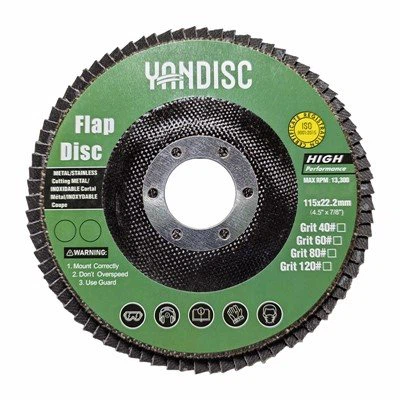
Flap Disc If you’re interested in learning more about our products or want to discuss your specific ceramic polishing requirements, feel free to reach out to us. We’re always happy to have a chat and help you find the best solution for your needs.
References
- "Ceramics: Structure, Properties, Processing, and Applications" by W. D. Kingery, H. K. Bowen, and D. R. Uhlmann
- "Abrasive Machining Technology: Theory, Process, and Practice" by Y. Altintas and M. Brecher
Henan Yandisc Hardware Tools Co., Ltd.
As one of the most professional abrasive polishing wheel manufacturers and suppliers in China, our products have good reputation in the market. Please feel free to wholesale high quality abrasive polishing wheel made in China here from our factory. Customized orders are welcome.
Address: Zinan Road, High-tech Industrial Development Zone, Zhengzhou, Henan, China
E-mail: info@yandisc.com
WebSite: https://www.yandisc.com/
