Hey there, if you’re working with fiber coupled laser modules, you’ve probably stared at a spec sheet at 2 a.m. wondering, “Wait, what even is the actual output beam diameter here?” I get it—when I started this gig as a supplier, I thought that number was just a random box to check, too. Spoiler: it’s not. It’s one of the first things that’ll make or break your setup, whether you’re doing marking, cutting, medical stuff, or even just lab testing. Let me break this down like we’re chatting over coffee, no stuffy jargon dump. Fiber Coupled Laser Modules
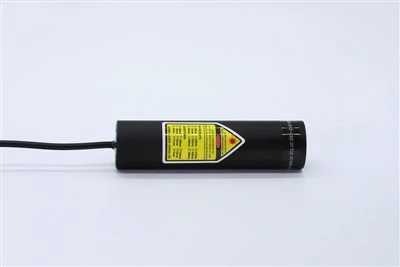
First off, let’s get one thing straight: “output beam diameter” isn’t a one-size-fits-all number. It depends on two big things—your laser module itself, and what you’re measuring it with. Most of our customers (and honestly, a lot of other suppliers) quote two values: the “1/e² diameter” and the “full angle divergence.” Wait, 1/e²? That’s just the standard way to measure beam size for lasers—think of it as where the laser’s power is dropped to ~13.5% of its peak. Why that number? Because if you just measured where the beam stops being visible, you’d get a way bigger, inaccurate number. That’s the spec you’ll see on our datasheets, and it’s the industry standard for fiber coupled modules.
Now, for our modules specifically, the fiber core size is the biggest driver here. Duh, right? Fiber coupled lasers run their beam through an optical fiber, so the core width dictates how big the output beam is when it exits the fiber end. We offer different core sizes for different jobs—small cores (like 10μm or 20μm) for tight, high-precision work, and bigger cores (up to 100μm or more) for higher power applications where you don’t need super tiny spot sizes. Let’s do a quick example: a 20μm core fiber from our 5W green fiber coupled module has a 1/e² beam diameter right at the fiber tip of ~20μm, give or take a little—fiber manufacturing has tiny tolerances, nothing crazy, like ±1μm. A 100μm core fiber for a 50W IR module? That’s a ~100μm beam diameter at output. Makes sense, no tricks here.
But wait, don’t confuse the beam diameter at the fiber tip with the beam diameter you’ll get after it travels some distance. That’s where divergence comes in. Lasers aren’t perfect parallel beams—they spread out as they go, just like a flashlight beam gets wider the farther you are from it. The full angle divergence (quoted in milliradians, mrad) is how fast that spread happens. For our fiber coupled modules, divergence is super low—usually around 0.1 to 0.5 mrad, depending on core size. Smaller cores have slightly higher divergence, but it’s negligible for most work. Let’s crunch numbers again: if a 20μm core has 0.2 mrad divergence, how big is the beam 1 meter away? The formula is (diameter at tip) + (2 * divergence * distance in meters). So that’s 20μm + (2 * 0.2 mrad * 1000mm) = 20 + 40 = 60μm at 1m. That’s tiny, right? Compare that to a 100μm core with the same 0.2 mrad divergence: at 1m, that’s 100 + 40 = 140μm. See how the core size plays into both the tip diameter and the spread at distance?
Now, a common mistake we see customers make: they see a 100μm beam diameter spec and think “that’s the spot size I’ll use for my workpiece.” Wait, hold up—if you’re using a focusing lens (which you almost always do, because you want a tiny spot on your target), the output beam diameter at the lens is what matters for your spot size, not the fiber tip. Let’s explain that simply. If you take that 20μm, 60μm diameter at 1m, and focus it with a lens, the spot size you get is (beam diameter at lens) * (focal length of lens / distance from lens to fiber tip). So if your lens has a 50mm focal length, and the fiber is 10mm away from the lens, the beam at the lens is ~20μm, so spot size is (20μm * 50mm) / 10mm = 100μm. That’s your actual working spot size—way more useful than the raw fiber tip diameter, right? That’s why we always remind customers to think about their intended lens setup when they’re picking a module.
Another thing: some suppliers might quote “elliptical beam” instead of round, especially for diode-pumped fiber lasers. Wait, do we have those? Yeah, but our modules are optimized to have as close to a Gaussian round beam as possible—no wonky oval shapes here. The 1/e² spec works for round beams, which is what you want for consistent cutting, marking, or medical procedures. If you had an elliptical beam, you’d have two different diameters, but that’s rare for properly fiber coupled modules from a reputable supplier like us.
Wait, let’s talk about power levels, because that ties in too. Higher power modules—say 100W, 200W, even 1kW—what’s their beam diameter? We use larger core fibers for higher power, because smaller cores can’t handle all that heat without damage. So a 200W IR fiber module might have a 50μm core, so 1/e² diameter ~50μm at output, divergence around 0.3 mrad. That’s still small enough for precision work, but can deliver way more power than a low-power module. If you tried to use a 20μm core for 200W, the fiber would overheat and crack—total waste, and dangerous. So power and core size go hand in hand, which means beam diameter scales with that, too.
Now, let’s clear up a myth: “bigger beam diameter = lower quality laser.” Not at all. It’s about what you need. If you’re marking a tiny QR code on a phone screen, you need that 20μm core, small beam diameter, tight spot. If you’re cutting thick metal, you need more power, which means a bigger core, so a bigger beam diameter at output. That’s not a flaw—it’s matching the module to your use case. We’ve had customers come in asking for a “small beam” for a job that actually needs higher power, so we walk them through that instead of just pointing to a spec sheet. That’s the stuff we don’t see from other suppliers—we’re not just pushing a number, we’re helping you pick the right one.
Wait, what about measurement? How do we measure the output beam diameter in-house? We use a beam profiler (a little device that captures the laser’s cross-section) to get that 1/e² number, which is way more accurate than just using a ruler and a power meter. We double-check every single module before it leaves our shop—no outliers, no guessing. A lot of smaller suppliers skip the beam profiler step, which is why their specs might be off. We don’t do that; each module is tested, so you get the exact diameter you’re paying for.
Let’s get specific with some real examples from our product line, because I think that helps. For our entry-level 1W 405nm fiber coupled module: core size is 10μm, 1/e² output beam diameter is ~10μm, divergence is ~0.3 mrad. Perfect for alignment, small part marking, or lab experimentation. Then our mid-range 10W 532nm green module: 20μm core, ~20μm beam diameter, divergence ~0.2 mrad. Great for medical device marking or precision engraving. Our high-power 150W 976nm IR module: 60μm core, ~60μm beam diameter, divergence ~0.25 mrad. That’s for cutting thin metal, welding plastics, and industrial automation. See how those numbers line up with what we talked about earlier? No random numbers here—each spec is tailored to the module’s purpose.
Another common question: can the beam diameter change after you buy the module? If you take good care of it, no. The fiber is sealed, so you don’t have to worry about dust or misalignment (unless you drop it, obviously). If you break the fiber tip, that can change the output, but as long as you handle it properly, the beam diameter stays consistent. We also offer cleaved and polished fiber tips, so you don’t have to do any extra work on installation—plug and play, basically, which means no chance of messing up the output diameter.
Wait, what about if you’re using a beam expander? Oh, right—some customers use beam expanders to make the beam wider before focusing, which changes the spot size. A beam expander takes the input beam (say, our 20μm, 1m beam diameter at 1m) and makes it, for example, 2x wider, so 40μm at 1m. Then when you focus it, that gives a smaller spot size because you’re using a wider beam. It sounds counterintuitive, but it’s true—wider beam = tighter focus, up to a point. We can help you calculate that, too, if you send over your lens and expander specs. That’s the kind of tailored support we offer; we’re not just a store, we’re a resource.
Let’s circle back to the original question: “What is the output beam diameter of fiber coupled laser modules?” The short answer is: it depends on core size, wavelength, power, and how you measure it, but for our modules, it’s the 1/e² diameter at the fiber tip, ranging from 10μm to 100μm+ depending on the model, with divergence low enough that it only adds a tiny bit of diameter at working distances. The long answer is that it’s a spec that ties directly to your application, so picking the right one isn’t just about numbers—it’s about matching your needs to what we build.
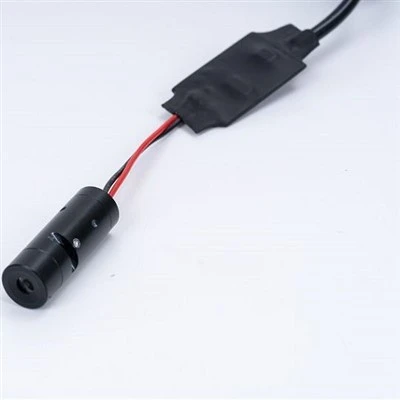
If you’re in the market for a fiber coupled laser module, or you’re confused about beam diameters, divergence, or matching a module to your setup, hit us up. We can walk through your use case, pull up real specs for our models, and even help you calculate the spot size you’ll get with your existing lenses. No sales pitch, no jargon, just honest answers. We’ve worked with small startup labs and big industrial manufacturers alike, so we’ve seen every use case there is. Whether you’re marking jewelry, cutting sensors, or doing research, we’ve got a module that fits, and we’ll make sure you get the right beam diameter for your job. Don’t waste time guessing—reach out, and we’ll sort it out together.
Cross Line Laser Modules References:
- Siegman, A. E. (1986). Lasers. University Science Books.
- Kogelnik, H., & Li, T. (1966). “Beam propagation and the theory of Gaussian beams.” Proceedings of the IEEE, 54(10), 1312-1329.
- International Organization for Standardization. (2017). ISO 11146-1:2017, Lasers and laser-related equipment – Test methods for laser beam widths, divergence angles and beam propagation ratios – Part 1: Stigmatic and simple astigmatic beams.
Changshu Desheng Optics Electronics Co., Ltd.
As one of the most professional fiber coupled laser modules manufacturers and suppliers in China, our products have good reputation in the market. Please feel free to buy advanced fiber coupled laser modules for sale here from our factory. Good service and quality products are available.
Address: 8A, Yineng science and technology industrial park, No.183, Yinhe Road, Southeast Development Zone, Changshu, Jiangsu Province, China.
E-mail: desheng1@dershinelaser.com
WebSite: https://www.ds-lasers.com/
