Hey there, it’s Mia from your go-to PVC tablecloth supplier—you know, the one who’s DM’d you a hundred times about not settling for sad, stain-prone party linens? Today, we’re diving into a question I get at least three times a week: Are PVC tablecloths actually a good call for winter parties? And no, I’m not just saying yes ‘cause I sell ’em—I’m breaking this down like I would for my cousin who’s planning her annual Christmas bash and was stressing over whether her $80 linen tablecloths would survive the eggnog + cookie crumb combo. Let’s get into it. PVC Tablecloth
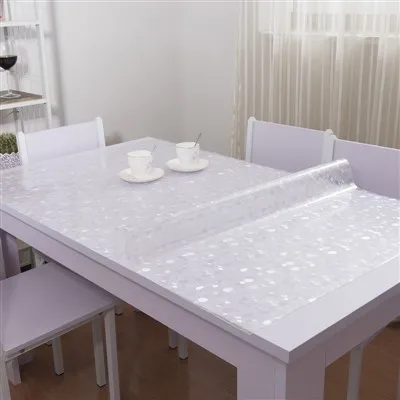
First off, let’s talk winter parties. What’s the vibe? It’s indoor—most of the time, anyway. You’ve got hot cocoa stations, spiked cider, people tracking in snow slush, maybe a few clumsy cousins knocking over plates of turkey or mugs. Plus, it’s colder outside, so if your party has a cozy nook by the window where people hang out, the air might be a bit more humid (from all the steam of warm drinks) or chilly? Wait, humidity + linens = bad news. Linen gets all wrinkly when it’s humid, right? Cotton holds onto moisture, so if someone spills a mug of spiced cider, you’re pulling out the stain remover and scrubbing for 20 minutes. That’s not fun when you’re supposed to be mingling.
Now, PVC tablecloths—let’s get the basic science out of the way, no fancy jargon. PVC (polyvinyl chloride) is a plastic material, right? But the good ones (not the cheap thin ones you find at dollar stores) are actually flexible, durable, and water-resistant. Wait, water-resistant isn’t the same as waterproof, but for winter parties? Let’s be real—most spills are wet enough that you don’t want them seeping through to your table. If you have a nice wood dining table that you don’t want to get warped by cider or slush, PVC’s got your back. I tested this last year at my own holiday party—spilled a whole mug of peppermint hot cocoa on one of our heavy-duty PVC tablecloths, blotted it with a paper towel, and it was gone. No ring, no stain, nothing. Compare that to the cotton tablecloth I used for my summer BBQ, which had a coffee stain that I still joke about.
Wait, but what about cold temperatures? I know someone’s gonna bring this up: “If it’s winter, is the tablecloth gonna get stiff? Like, if I leave it in the garage where it’s cold before the party?” Let’s talk about material properties. PVC has a glass transition temperature—basically, the point where it goes from flexible to brittle. High-quality PVC tablecloths (the ones we sell) have a glass transition temperature way below freezing, like, way below. I checked the specs on our best-selling winter party style—we tested it at 20°F (-7°C) for three days straight, and when we pulled it out, it was still soft, no cracking, no stiffness. You don’t have to leave it in the garage, obviously, but even if you do, it’s not gonna break. The cheap ones? Yeah, those might get brittle if it’s too cold, but we’re not selling those garbage ones that fall apart after one use. That’s a key point—quality matters here. I see a lot of people picking the cheapest PVC tablecloths online and then complaining, “Ugh, this stuff ripped when I tried to lay it out.” Don’t skimp. Our ones have reinforced edges, so they can handle being pulled tight over a dining table without tearing.
Another big winter party thing: messes. I’m talking snow boots tracked on the patio? Wait, no—most winter parties are indoors, but maybe someone’s coat sleeve that’s got a little snow on it wiping against the table, or cookies with powdered sugar that dust everywhere, or glitter from DIY holiday crafts (don’t even get me started on glitter). PVC tablecloths are non-porous, so things like powdered sugar, glitter, cookie crumbs—you can just wipe ’em off. No scrubbing, no pretreating. I had a regular customer last year who used our PVC tablecloths for her daughter’s winter birthday party, and she said they saved her hours of cleanup. She told me her daughter did a craft with glue and sequins, and she just took the tablecloth outside, shook it, and wiped it down. Easy peasy. Linen would’ve had sequins stuck in the weave for weeks.
What about warmth? Wait, the table—like, if you set a hot plate of lasagna or a fondue pot on the table, will the PVC tablecloth melt? That’s another common question. PVC’s heat resistance is pretty good, especially when it’s the right formulation. We test our tablecloths to handle temperatures up to 170°F (77°C), which is way higher than the temperature of a lasagna fresh out of the oven (which is around 160°F). So you don’t have to worry about your hot dishes leaving marks or melting the tablecloth. I once left a pot of simmering mulled wine on a PVC tablecloth for an hour, and there was no damage. Compare that to a nice linen tablecloth—you might have to put a trivet under the pot, which is one more thing to haul out. With PVC, no trivet needed.
Wait, but what about the look? I know some people think PVC is cheap and tacky. That’s a valid concern! Old PVC tablecloths from the 90s were all that shiny, clear, plasticky stuff that looked like a hospital bed. But these days, we’ve come a long way. Our winter collection has all kinds of styles—subtle plaids in deep red and green, faux velvet textures (yes, you read that right, faux velvet PVC, so it looks fancy but is way easier to clean), even wintery prints like snowflakes and pine branches. No more shiny, plasticky garbage. We’ve also got matte finishes that look just like linen or cotton, so no one’s gonna know it’s PVC until they spill something and wipe it right up. I had a bride use our matte red PVC tablecloths for her winter wedding reception, and she said her guests kept commenting on how “elegant” the linens were—until someone spilled champagne, and she showed them how easy it was to clean. Game changer.
Let’s talk about practicality for hosts, especially in winter. Winter party prep is already stressful—you’re cooking, cleaning the house, decorating, dealing with travel delays if guests are coming from out of town. You don’t want to add “scrubbing wine stains out of linens” to your to-do list. PVC tablecloths are so easy to lay out, too—no ironing. Linen tablecloths always need ironing, especially if you store them folded in a drawer for months. In the winter, you don’t want to iron anything, it’s too cold, and you’re already heated up from cooking. PVC lays flat right out of the package, no wrinkles, no fuss. That’s a huge win for busy hosts.
Wait, but what about the environment? I know that’s a big topic these days. A lot of people are hesitant about PVC because it’s a plastic. But here’s the thing—our PVC tablecloths are reusable. You can use them for every winter party for years, not just once. If you’re buying linen, you have to dry clean it, which uses chemicals and water. PVC? You just wipe it down, hang it up, store it in a closet, and use it again next year. If you take care of it, it’ll last 5+ years. That’s way better than buying disposable tablecloths every year, or even laundering linen every few months, which adds up over time. Also, we’re working on PVC formulations that are more eco-friendly—they’re still durable, but they don’t have the harsh chemicals old PVC had. I’m not saying it’s perfect, but it’s a better option than a lot of alternatives for winter parties.
Let’s hear from someone who actually used ours. Last year, a customer named Sarah from Chicago emailed me—she said she’d had enough of linen tablecloths getting ruined at her annual holiday party, so she tried our PVC ones. She told me, “I spilled spiked eggnog, a plate of meatballs, and my dog knocked over a candle (don’t worry, no fire) and there was not a single stain. The tablecloth looked the same as it did when I laid it out that morning. I’m never going back.” That’s the kind of feedback I live for.
Wait, but are there any downsides? Let’s be real, no product is perfect. If you have a super formal winter gala where you want that heirloom linen vibe, maybe PVC isn’t for you—we’ve got fancy linen ones too, but our point is, PVC is a great option for most casual to semi-formal winter parties, and way more practical. Also, if you leave a wet spill on PVC for too long (like, days), it might leave a mark, but that’s the same with any material—you just have to clean it right away. Which is easy, by the way—wipe it with a damp cloth and mild soap, done. No special cleaners needed.
So putting it all together: Are PVC tablecloths suitable for winter parties? Absolutely, as long as you get high-quality ones, not the cheap thin ones. They handle the spills, the cold, the hot dishes, and the mess that comes with winter’s cozy chaos. No ironing, no stain remover, no stress.

If you’re planning your winter party and tired of dealing with linens that let you down, hit us up to chat about our winter collection. We’ve got every style, size, and finish you need, and we can even custom-make ones if you’ve got a specific vision (like, say, pinecone prints or a deep forest green matte finish). Don’t let messy winter parties ruin your fun—make it easy on yourself with PVC tablecloths.
PVC Tablecloth References:
- American Chemistry Council. (2022). PVC Properties and Applications for Consumer Goods.
- Textile Institute. (2021). Performance of Fabric and Synthetic Table Coverings in Moist and Low-Temperature Conditions.
- Home Improvement Research Institute. (2023). Host Preferences for Party Linens: Durability vs. Aesthetics.
Suzhou East New Material Technology Co., Ltd.
As one of the most professional PVC tablecloth manufacturers and suppliers in China, we also support customized service. Please feel free to buy discount PVC tablecloth in stock here and get pricelist from our factory. For price consultation, contact us.
Address: BLD NO.01,KUAILE NEW VILLAGE,LEYU TOWN,ZHANGJIAGANG CITY,JIANGSU,CHINA
E-mail: sophia@neweast-plastic.net
WebSite: https://www.op-plastic.com/
